



jamshedpur
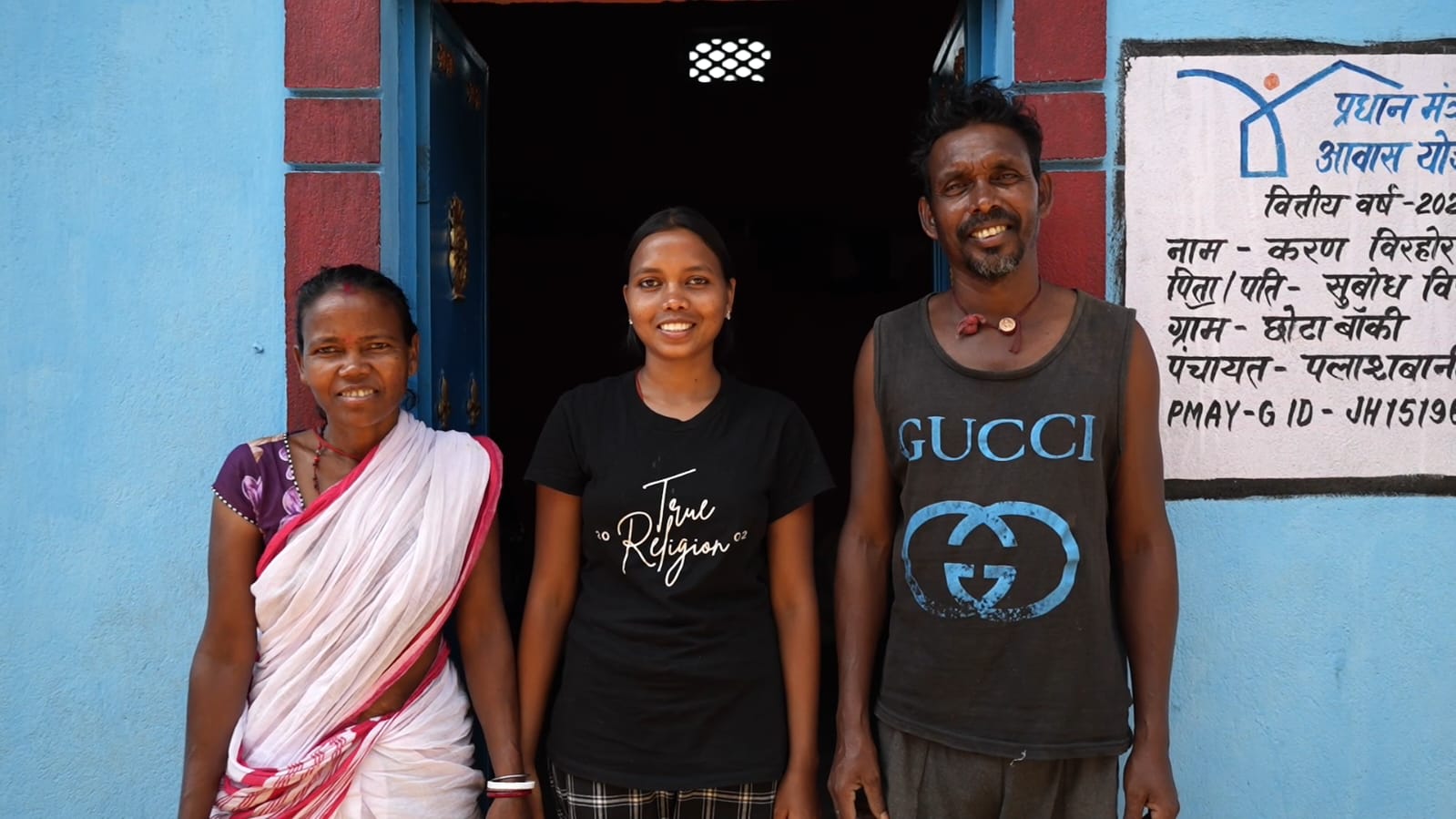
Balika Birhor’s story begins in the small settlement of Chhota Banki in East Singhbhum, yet her journey speaks far beyond its borders. At just 21, she stands as a shining example of what determination can achieve when complimented with timely support. Daughter of Sukhrani and Subodh Birhor, she belongs to the Birhor PVTG community, where most families depend on forest-based work for survival. Her parents brew and sell rice beer in the local market, earning about ₹500 a month. As a first‑generation learner with limited exposure to opportunities beyond her village, Balika grew up with more barriers than choices, yet she chose to push forward.
She began her education in a local Hindi-medium school. A major turning point came when Tata Steel Foundation supported her in securing admission to Carmel School, Chakradharpur, Jharkhand. She completed her Matriculation in 2020 with 82% from Carmel School and her Intermediate in Science from St. Xavier’s Inter College, Lupungutu, with 63%. This exposure helped her gain confidence and think about her future.
After completing Intermediate, Balika went through a challenging phase. She wanted to pursue higher education, but her family was hesitant to allow her to move to a big city. With limited awareness and exposure, stepping out of the village felt uncertain. At this stage, a team from project Aakanksha engaged closely with her and her family. Aakanksha, enabled by Tata Steel Foundation, focuses on educating children from Particularly Vulnerable Tribal Groups (PVTGs), especially the Sabar Birhor and Pahariya communities in Jharkhand. Under this initiative, Balika was guided through psychometric tests to better understand her strengths and career options. The team also counselled her family and helped them understand how higher education could open up stable career opportunities for her. This played an important role in building their confidence and enabling her to move forward.
Namita Toppo, Manager, Tribal Identity, Tata Steel Foundation, shares: “Through Aakanksha, we are committed to enabling access to education and opportunities for Particularly Vulnerable Tribal Groups (PVTGs). Balika Birhor’s achievement brings this vision to life. Her journey is a testament to the determination and resilience within these communities. Despite numerous challenges, she has carved her own path and emerged as a symbol of hope and inspiration for the entire Birhor community.”
Steadily moving up the career graph, support continued through project Samriddhi, where she received coaching and mentorship; she cracked the entrance exam and secured admission into the General Nursing and Midwifery (GNM) programme at Narayana Hrudayalaya College of Nursing in Bengaluru. Project Samriddhi, enabled by Tata Steel Foundation, empowers young tribal women from Jharkhand and Odisha by training them as nursing professionals from renowned institutions. For Balika, this was a big step, as she had never travelled far from her village. The Foundation also facilitated her first flight journey and continued to guide her throughout the course. Balika has now completed her training and secured a job at Narayana Hrudayalaya Hospital in Bengaluru. She will join in April 2026 as a Staff Nurse with an annual CTC of ₹3 lakh. She hopes to work in the emergency unit to gain wider experience and learn from different medical cases.
Adding his thoughts, Suraj Gilua, Manager Samriddhi, Tribal Identity, Tata Steel Foundation, opines “Through Samriddhi, we strive to create employment-linked opportunities for young women from marginalized Scheduled Castes, Scheduled Tribes and PVTG communities from the remote and interior areas of Kolhan. Balika Birhor’s journey—from a remote Birhor PVTG community to pursuing nursing-highlights how the right skills, mentoring and structured support can unlock sustainable livelihoods for the most marginalized. Her achievement sets a powerful example for the Birhor community and strengthens our commitment to deepen impact led work with PVTG communities across the region.”
Reflecting on her journey, Balika shares, “Had it not been for Tata Steel Foundation, I might have stayed at home and been married early. The guidance and constant support I received from the team changed my life.” Her journey is now inspiring other young people in her community to continue their education and aim for professional careers.
Jiren Topno, Head, Tribal Identity, Tata Steel Foundation, shares: “Empowering Particularly Vulnerable Tribal Groups (PVTGs) begins with a profound respect for their lived realities and a commitment to shared trust. At Tata Steel Foundation, our Project Aakanksha initiative prioritizes access to quality education and holistic career counseling to bridge the gap between potential and opportunity for young potentials from such communities. Balika Birhor, one of the first young women from her community to secure formal employment, exemplifies the transformative power of institutional support coupled with personal resilience. We are honored by the community’s trust, which remains the cornerstone of our mission to co-create sustainable futures.”
Despite moving to a city, Balika remains connected to her village. She actively engages with women in her community, spreading awareness about menstrual health, nutrition and the importance of seeking medical care over traditional remedies. She also hopes to address the persistent water challenges in her village by installing a hand pump once she is financially stable.
Balika’s journey shows that with the right opportunities and guidance, young people from even the most remote areas can build meaningful careers and give back to their communities.
