~ improving access to early cancer detection and treatment for underserved rural communities at Kalinganagar, Meramandali and East Singhbhum ~
Jamshedpur: Tata Steel Foundation, in collaboration with Jamshedpur Cancer Society (JCS) through its hospital, Meherbai Tata Memorial Hospital (MTMH), announced the launch of a comprehensive Mobile Cancer Screening Initiative aimed at improving access to early cancer detection and treatment for underserved rural communities in Kalinganagar, Meramandali, and East Singhbhum.
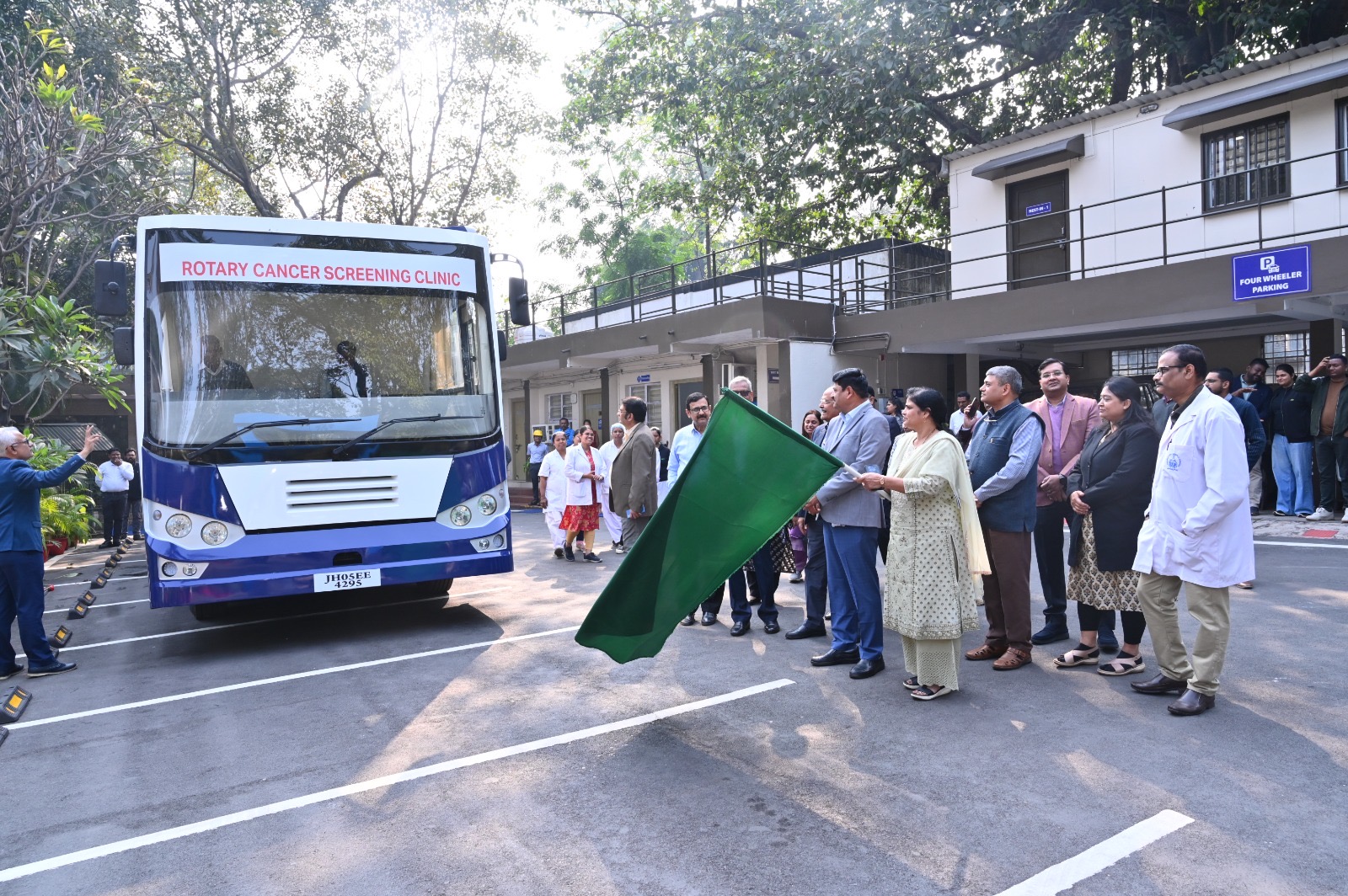
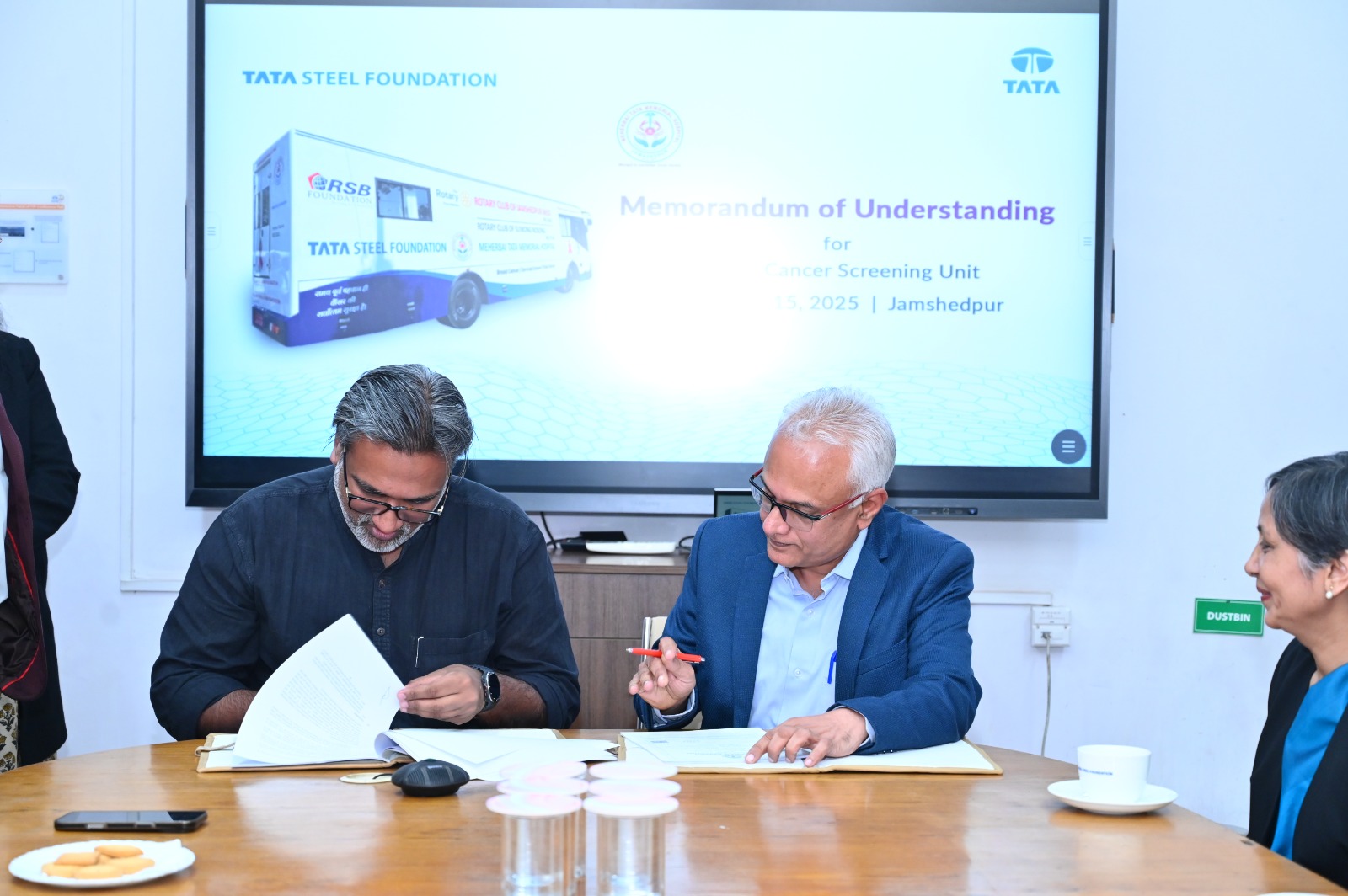
The initiative was formally launched with the signing and exchange of a Memorandum of Understanding (MoU) between Tata Steel Foundation and Jamshedpur Cancer Society. As a mark of commemoration, the a Mobile Cancer Screening Unit (mCSU) was flagged-off by Mrs D.B. Sailaja Ramam, Chairperson, Ladies Committee, MTMH.
Present on the occasion were D.B. Sundara Ramam, Director, Tata Steel Foundation & Chairman MTMH; Dr Sujata Mitra, Vice Chairman, MTMH; Dr Koshy Varghese, Director, MTMH; Ashok Kumar Jha, President, RCJW; Abhijit Mitra, Project Lead, Rotary; Amitava Bakshi, Past President, Rotary; Amresh Sinha, Member, Global Grant Project; Dr Vinita Singh, GM Medical Services; Dr Ashok Sunder, Chief – Medical Indoor Services; Dr Mamta Rath Datta, Chief – Medical Support Services; Mohit Das, Chief – Corporate Services, TSM; Debdoot Mohanty, Chief – Corporate Services, TSK; Nishith Kumar Sinha, Secretary Societies, TSL; Anuj Mehandiratta, Treasurer, JCS; Sourav Roy, CEO, Tata Steel Foundation, along with the hosting leadership from Tata Steel Foundation and MTMH.
The initiative, proposed to be functional from December 2025 to March 2028, will provide end-to-end cancer care solutions, covering community awareness, screening, confirmatory diagnosis and linkage to definitive treatment. The programme will focus on oral, breast and cervical cancers, which account for a significant burden of preventable cancer-related morbidity and mortality in India. Under the project, monthly mobile screening camps will be organised at each of the three locations. Each camp will run for 4.5 days (Monday to Thursday and a half-day on Friday) and is expected to deliver up to 90 mammograms, 65 PAP smears, and check 135 oral cancer cases. In addition to screenings, cancer awareness and primary prevention sessions will be conducted to educate communities on risk factors, early symptoms and the importance of timely medical intervention.
A key pillar of the initiative is capacity building of local healthcare professionals. Master trainers will be trained at MTMH, who will subsequently train ASHA workers and frontline health staff, strengthening grassroots-level screening and referral mechanisms. Community mobilization will be supported by the Foundation, in coordination with the Block and District Health Offices, ensuring alignment with public health systems. Individuals with positive screening results will be referred to MTMH for confirmatory diagnostics. Diagnosed patients will be supported in accessing appropriate treatment, including linkage to Government health schemes wherever applicable.
Speaking on the occasion, D.B. Sundara Ramam, Director, Tata Steel Foundation, said: “There is greater need for specialised healthcare to reach the last mile person in the community. The mCSU is a noble way to take state-of-the-art screening system to the wider masses for who travelling large distances to access good healthcare is difficult. I wish the team engaged in this project the very best and we hope to reach out to those who need this the most.”
Adding his thoughts, Sourav Roy, CEO, Tata Steel Foundation, stated: “This is one the good examples of showcasing how Jamshedpur can move to an empathetic model city, where people come together to solve for social causes. There is a need for public assets to be revived and ensure there is organic demand and push for public systems.”
By decentralising cancer screening and strengthening referral pathways, this initiative aims to bridge critical gaps in cancer care, enhance awareness, promote early diagnosis, and ultimately improve health outcomes for rural and vulnerable populations across Odisha and Jharkhand.